---
title: "15 Most Successful Minimum Viable Product Examples [And Their Story]"
entityName: "EnactOn Technologies Private Limited"
pageType: "Article"
url: "https://www.enacton.com/blog/minimum-viable-product-examples/"
rawMdUrl: "https://www.enacton.com/blog/minimum-viable-product-examples.md"
lastUpdated: "2025-02-27"
---

# 15 Most Successful Minimum Viable Product Examples [And Their Story]

## Additional Documentation & Details

<style>
  
  .content-strip {
    
    margin: 28px 0 !important;
    padding: 22px 28px !important;
    background: #f8fafc !important;
    border: 1px solid #e2e8f0 !important;
    border-left: 5px solid #4f46e5 !important;
    border-radius: 12px !important;
    box-sizing: border-box !important;
  }
  /* Header flex container to space tag and author */
  .content-strip .content-header {
    display: flex !important;
    align-items: center !important;
    justify-content: space-between !important;
    gap: 12px !important;
    margin-bottom: 12px !important;
  }
  .content-strip .content-label {
    display: inline-flex !important;
    align-items: center !important;
    gap: 6px !important;
    font-size: 11px !important;
    font-weight: 700 !important;
    text-transform: uppercase !important;
    letter-spacing: 0.08em !important;
    color: #4f46e5 !important;
    margin: 0 !important;
  }
  .content-strip .content-dot {
    width: 6px !important;
    height: 6px !important;
    background-color: #10b981 !important;
    border-radius: 50% !important;
    display: inline-block !important;
  }
  .content-strip .content-author {
    font-size: 12.5px !important;
    font-weight: 500 !important;
    color: #94a3b8 !important;
    margin: 0 !important;
    white-space: nowrap !important;
  }
  .content-strip h3 {
    color: #0f172a !important;
    font-size: 18px !important;
    font-weight: 700 !important;
    line-height: 1.35 !important;
    margin: 0 0 10px 0 !important;
    letter-spacing: -0.01em !important;
  }
  .content-strip p.content-body {
    color: #475569 !important;
    font-size: 14.5px !important;
    font-weight: 500 !important;
    line-height: 1.6 !important;
    margin: 0 0 12px 0 !important;
  }
  .content-strip p.content-body:last-child {
    margin-bottom: 0 !important;
  }
  /* Inline Links */
  .content-strip a.content-link {
    color: #4f46e5 !important;
    font-weight: 600 !important;
    text-decoration: underline !important;
    text-underline-offset: 2px !important;
    transition: color 0.15s ease !important;
  }
  .content-strip a.content-link:hover {
    color: #3730a3 !important;
  }
  @media (max-width: 640px) {
    .content-strip { padding: 18px 20px !important; }
    .content-strip .content-header {
      flex-wrap: wrap !important;
      gap: 4px !important;
    }
  }
</style>
<div class="content-strip">
  <div class="content-header">
    <div class="content-label">
      <span class="content-dot"></span>THE SHORT ANSWER
    </div>
  </div>
  <p class="content-body">
    Some of the world’s biggest companies started with a simple MVP—a basic version of their product built to test one core idea. These success stories prove that validating your idea early can be the first step toward building something extraordinary.
  </p>
</div>

Imagine this: some of the biggest companies in the world, the ones you can’t go a day without hearing about, started with almost laughably simple ideas. Think of a scrappy team testing an idea with just a basic website or a single quirky feature.

No fancy tech, no million-dollar budgets- just a core idea and a willingness to see if it resonated with people. That’s the magic of a Minimum Viable Product (MVP).

MVPs are all about doing more with less. They’re the "rough draft" of a product, stripped down to the essentials, to see if there’s a real demand for what you’re offering.

We have created a list of such MVPs that went on to change industries. These Minimum Viable Product examples will show you how small ideas, tested thoughtfully, can lead to extraordinary success.

## Top 15 Minimum Viable Product Examples That Changed the Industry

### **1\. Amazon**
![Amazon before and after image](/images/Amazon.webp)

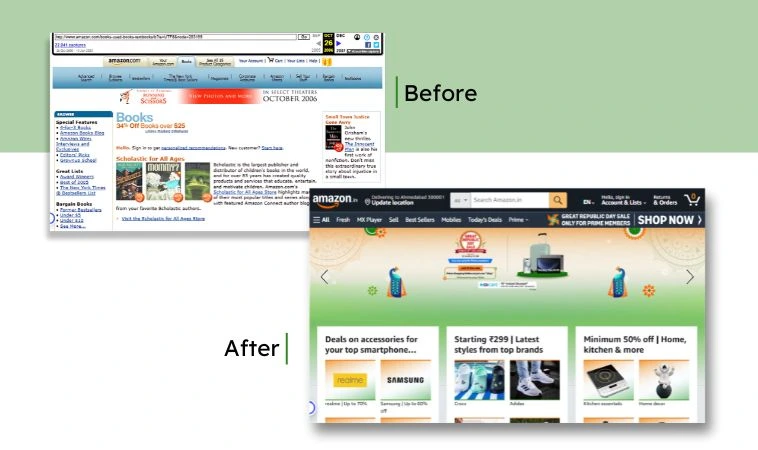
Did you know [Amazon](https://www.amazon.in/) started as just an online bookstore? Back in 1994, Jeff Bezos decided to sell books because they appealed to everyone and were easy to manage logistically. It was a smart move since he could test whether people would actually buy things online.

It worked out, of course! Once Bezos realized people loved the convenience of online shopping, he expanded Amazon to include everything from electronics to clothes. Now, it’s basically the go-to for anything you want to buy.

### **2\. Airbnb**
![Airbnb before and after image](/images/AIRNB.webp)

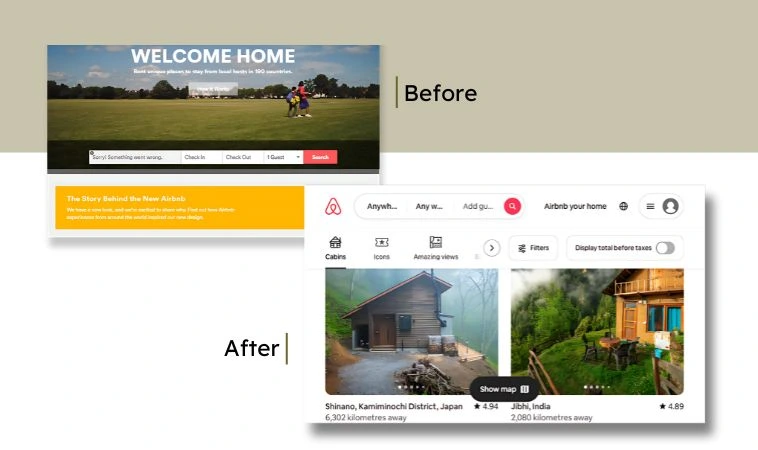
[Airbnb](https://www.airbnb.co.in/) had such humble beginnings. The founders, Brian Chesky and Joe Gebbia, were struggling to pay rent, so they put an air mattress in their living room and listed it online during a conference. They even called it “AirBed & Breakfast.”

It turned out, people loved the idea of affordable lodging that felt homey. With that validation, they built the platform we know today, expanding to include entire homes, quirky stays like treehouses, and luxury properties. Amazing how it all started with an air mattress!

### **3\. Dropbox**
![Dropbox before and after image](/images/Dropbox.webp)

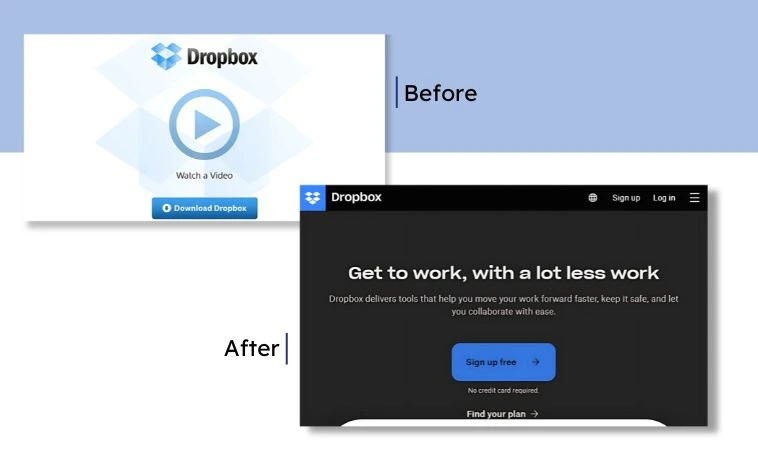
This one’s clever. [Dropbox](https://www.dropbox.com/) didn’t actually build their product right away. Instead, they made a short video explaining how their file-sharing service would work, syncing files across devices seamlessly.

That video was a hit! Overnight, they got 70,000 people to sign up. It was the perfect way to confirm that people wanted the service before sinking time and money into development. Smart, right? This makes it one of the best MVP examples in the list.

Related: [Top SaaS MVP Examples](/blog/top-saas-mvp-examples/)

### **4\. Zappos**
![Zappos before and after image](/images/Zappos.webp)

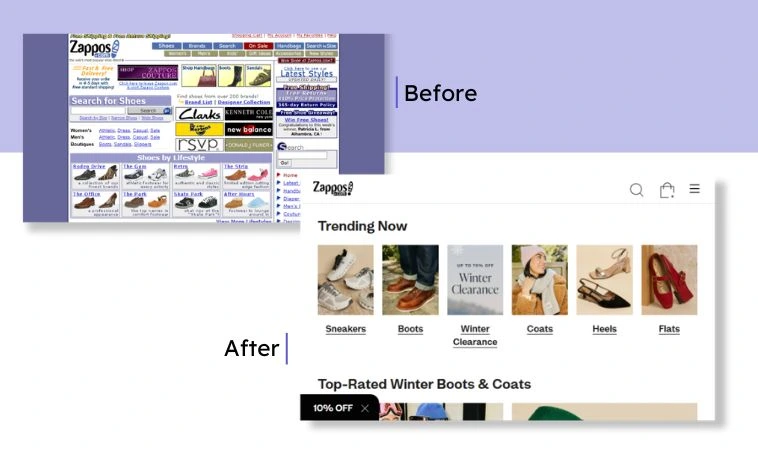
When [Zappos](https://www.zappos.com/) started, Nick Swinmurn wasn’t sure if people would even want to buy shoes online. So he went to local shoe stores, took pictures of their inventory, and posted them on a basic website.

Whenever someone bought a pair, Nick would go back to the store, buy the shoes, and ship them himself. It wasn’t scalable, but it showed there was a real market for online shoe shopping. Eventually, Zappos became a giant, and Amazon bought them for billions!

### **5\. Groupon**
![Groupon before and after image](/images/Groupon.webp)

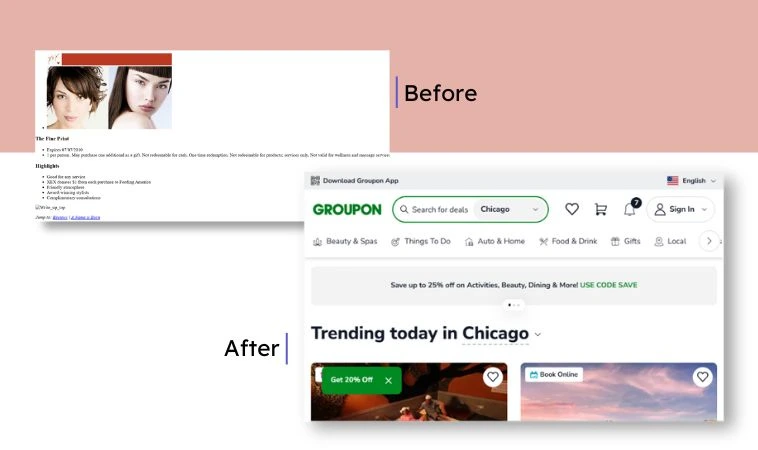
[Groupon’s](https://www.groupon.com/) start is kind of funny. It was just a simple WordPress blog where they posted daily deals. The founders would manually email coupons to customers and handle all the transactions themselves.

But people loved the group discount concept, so they stuck with it and built an automated system. From there, it exploded into a huge business. It was a very simple yet effective [MVP launch strategy](/blog/mvp-launch-strategies/) and a proof that you don’t need fancy tech to test an idea!

### **6\. Buffer**
![Buffer before and after image](/images/Buffer.webp)

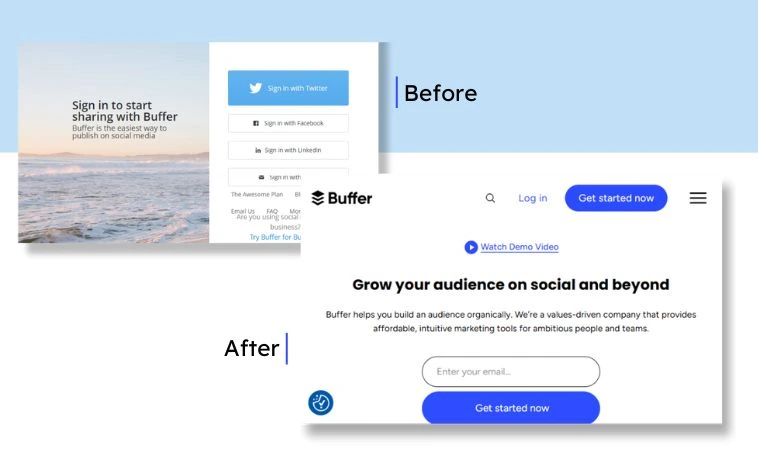
[Buffer’s](https://buffer.com/) MVP was literally just a landing page. It explained the idea of scheduling social media posts and had a pricing section. When people clicked on the pricing, they’d see a message saying, “The product’s not ready yet, but leave your email!”

This was genius because it let the founders gauge interest without building anything. Once they had enough feedback, they went all in, and Buffer is now a leading social media tool.

### **7\. Foursquare**
![Foursquare before and after image](/images/Foursquare-2.webp)

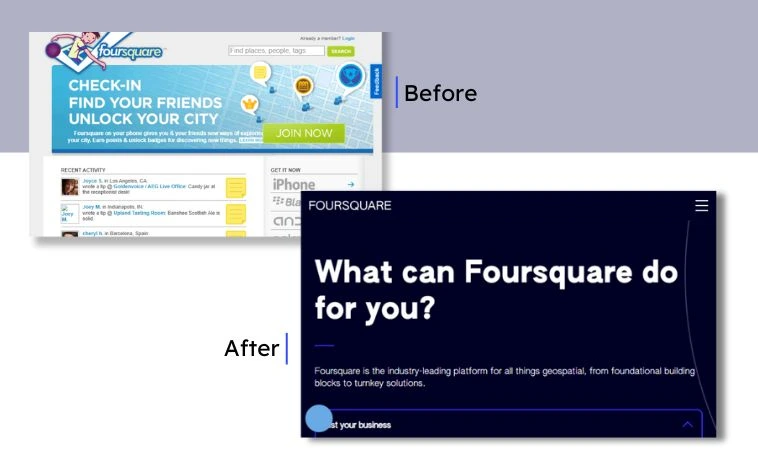
Remember when [Foursquare](https://foursquare.com/) was all about check-ins? That was their MVP, just letting users share their location with friends and earn badges for visiting places. It was super simple but kind of addictive.

People got hooked on the gamification, and the company used their feedback to add features over time. Now, it’s a full-on local search and discovery platform, but it all started with a little check-in feature.

### **8\. Twitter**
![Twitter before and after image](/images/Twitter.webp)

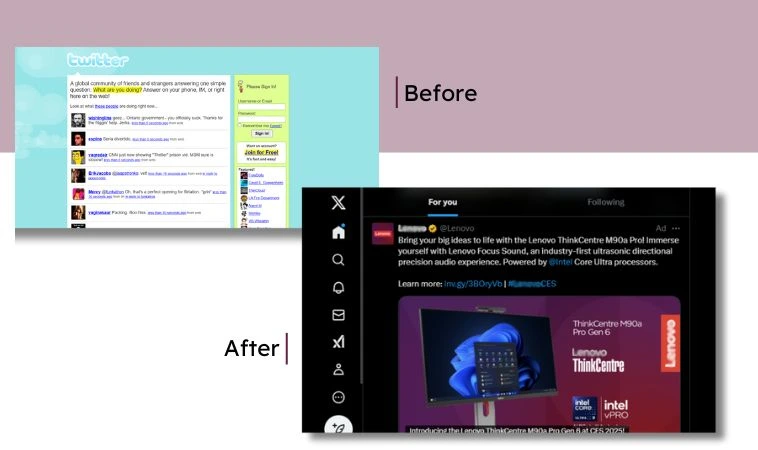
[Twitter](https://x.com/?lang=en) actually started as a tool for employees at a podcasting company called Odeo. It was a way to share short updates with each other via SMS, and it was originally called “twttr.”

When they realized how fun and simple it was, they opened it to the public. The idea of micro-blogging caught on quickly, and now Twitter is one of the biggest platforms for real-time communication. Crazy how something so simple can scale like that.

### **9\. Instagram**
![Instagram before and after image](/images/Instagram.webp)

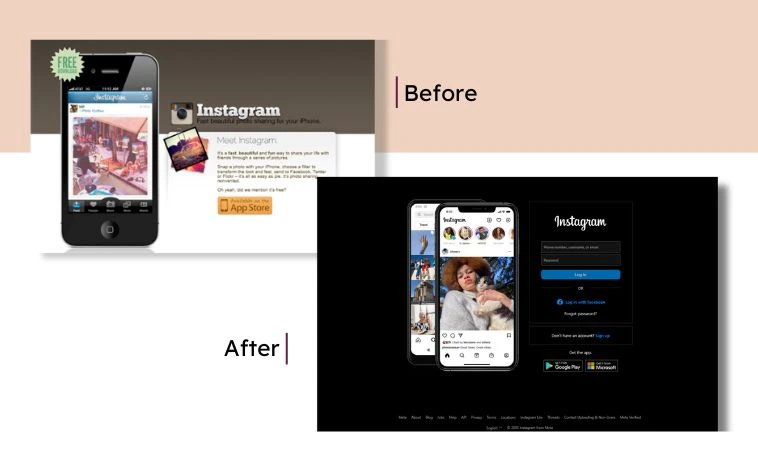
[Instagram](https://www.instagram.com/) wasn’t always the app we know today. It started as Burbn, which had a bunch of features like checking in at locations and earning points. But the founders noticed people were mostly using it to share photos.

So, they stripped away everything else and focused just on photo sharing with filters. It was a huge hit! Millions of people joined in no time, and now it’s one of the biggest social media platforms ever.

### **10\. Spotify**
![Spotify before and after image](/images/Spotify.webp)

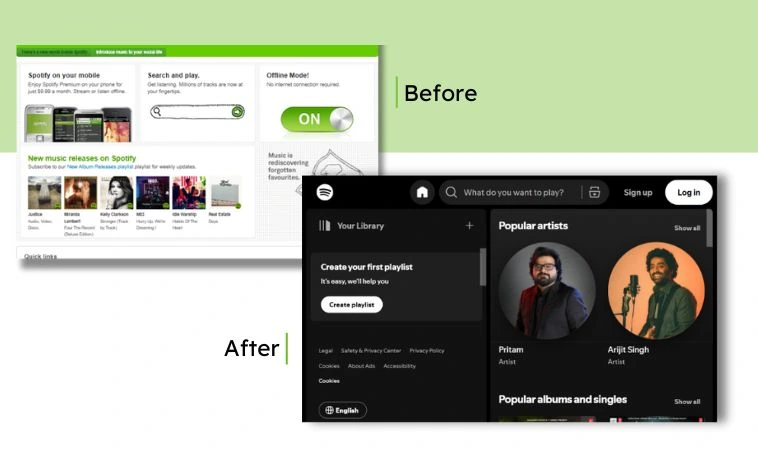
[Spotify](https://open.spotify.com/) is a perfect example of starting small. Their MVP was a free desktop app with a limited music library. The focus was on making streaming super smooth and user-friendly.

People loved the experience, and that gave Spotify the confidence to negotiate with music labels and expand their library. Today, it’s the leader in music streaming, but they made sure the basics worked first.

### **11\. WhatsApp**
![Whatsapp before and after image](/images/wHATSUP.webp)

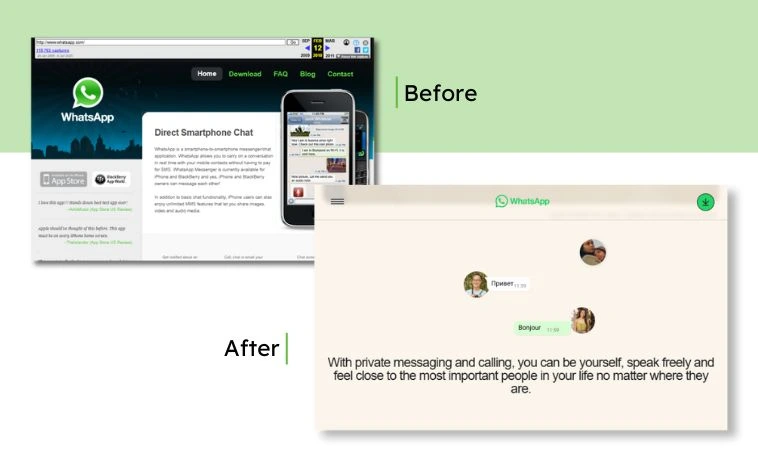
[WhatsApp](https://web.whatsapp.com/) didn’t even start as a messaging app. It was just a status-updating app, like, “Hey, I’m at the gym” or “Available.” But the founders noticed people were using it to communicate, so they pivoted to messaging.

Their MVP was super basic: no ads, no frills, just a clean interface for chatting. Turns out, that’s exactly what people wanted, and now it’s one of the most popular messaging platforms worldwide.

### **12\. Pinterest**
![Pinterest before and after image](/images/pinterest.webp)

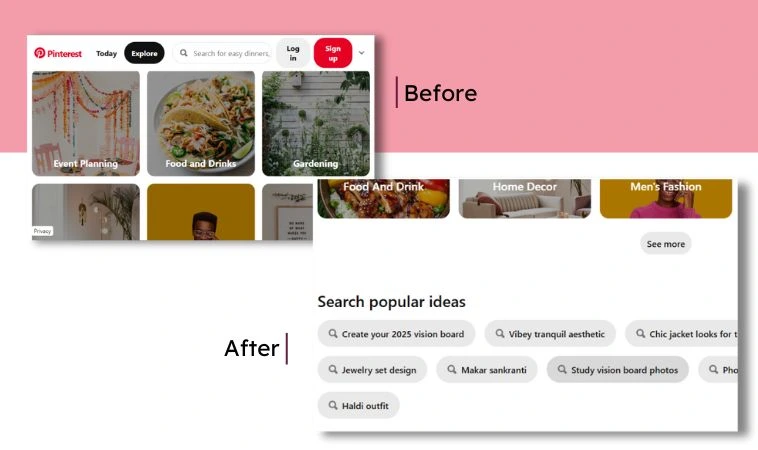
[Pinterest](https://in.pinterest.com/) didn’t start out as Pinterest. It was actually called “Tote” and was meant to be a shopping app. The problem? People weren’t really buying, they were just saving and sharing stuff they liked.

The founders realized the pinboard-style layout was what people loved most, so they leaned into that. Now it’s the go-to platform for ideas, inspiration, and creativity. Pretty cool pivot, huh?

### **13\. Snapchat**
![Snapchat before and after image](/images/Snapchat.webp)

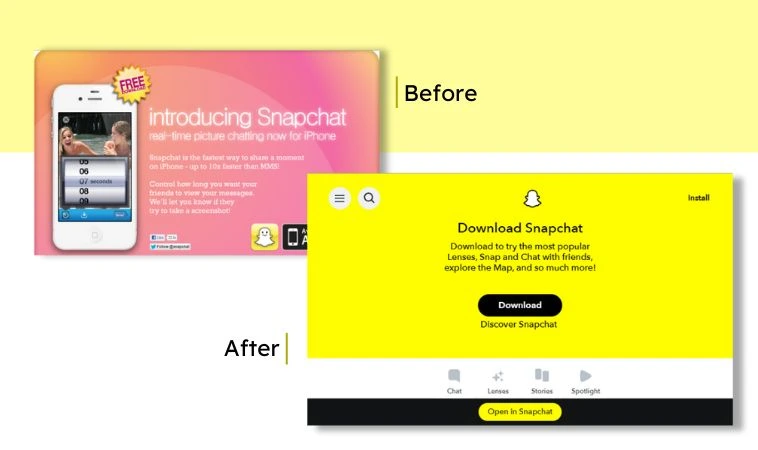
[Snapchat’s](https://www.snapchat.com/) MVP was called “Picaboo,” and it let users send photos that disappeared after a few seconds. At first, people thought it was just a quirky idea, but younger users loved how it made communication feel less permanent.

This idea of “ephemeral” communication caught on, and Snapchat expanded with Stories, filters, and other fun features. It’s now a massive player in the social media world.

### **14\. Slack**
![Slack before and after image](/images/slack-1.webp)

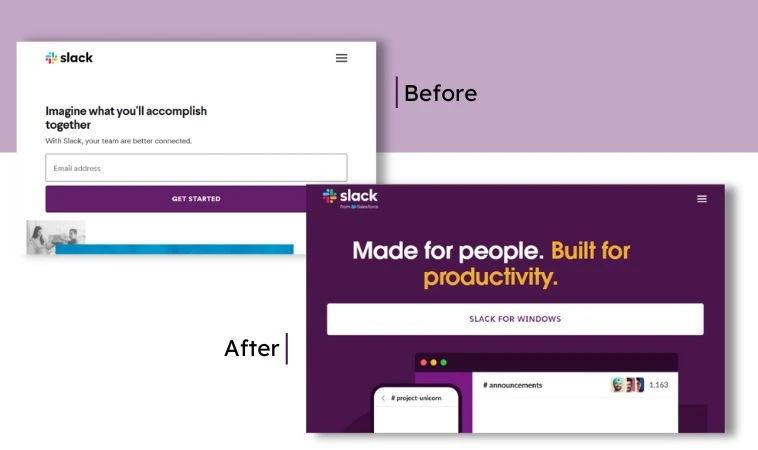
[Slack](https://slack.com/intl/en-in) wasn’t even supposed to be a product. It started as a communication tool for a gaming company called Tiny Speck. The game didn’t work out, but the team realized the messaging tool was super useful.

They turned it into Slack, focusing on simple team communication and file sharing. Feedback from early adopters helped them refine it into the powerhouse collaboration tool it is today.

### **15\. Etsy**
![Etsy before and after image](/images/Etsy.webp)

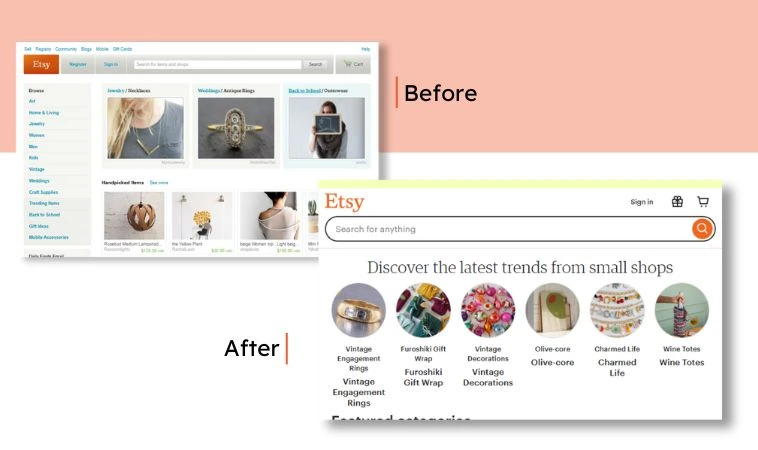
[Etsy](https://www.etsy.com/in-en/) began as a basic online marketplace for crafters and artists. The founders wanted to create a place where people could sell handmade and vintage goods, which wasn’t really a thing back then.

The MVP was simple- just a way to connect buyers and sellers. Over time, they added features like analytics, seller tools, and marketing options, making Etsy the go-to platform for unique, handcrafted items.

## Conclusion

These 15 MVP examples showcase that some of the world’s most influential companies didn’t start with fully polished products or grand-scale launches. Instead, they began with a clear vision, a basic prototype, and a willingness to learn from their users.

The key takeaway? It’s not about being perfect—it’s about starting, iterating, and letting real feedback shape your product.

Whether you’re dreaming of disrupting an industry or solving a niche problem, the best way to start is by building something tangible, testing it, and learning from real users.
![](/images/MVP-6.png)

That’s where we come in. Our [MVP development services](/mvp-development-services-for-startups/) are designed to help you take that first crucial step, turning your vision into a lean, functional product that’s ready to make an impact.

Let’s work together to bring your idea to life and set it on the path to success

Who knows? Your next simple idea might just become the next big thing.

<style>
  
  /* Main CTA container */
  div.enacton-mvp-cta {
    width: 100% !important;
    max-width: 100% !important;
    margin: 36px 0 !important;
    padding: 22px 28px !important;
    box-sizing: border-box !important;
    display: flex !important;
    align-items: center !important;
    justify-content: space-between !important;
    gap: 24px !important;
    position: relative !important;
    overflow: hidden !important;
    background: #ffffff !important;
    border: 1px solid #e2e8f0 !important;
    border-left: 5px solid #4f46e5 !important;
    border-radius: 12px !important;
    box-shadow: 0 4px 20px -4px rgba(15, 23, 42, 0.08) !important;
    
  }
  /* Left-side content */
  div.enacton-mvp-cta .enacton-mvp-cta-content {
    display: flex !important;
    flex: 1 1 auto !important;
    flex-direction: column !important;
    align-items: flex-start !important;
    gap: 7px !important;
    min-width: 0 !important;
    margin: 0 !important;
    padding: 0 !important;
  }
  /* Small heading/tag */
  div.enacton-mvp-cta .enacton-mvp-cta-tag {
    display: inline-flex !important;
    align-items: center !important;
    gap: 7px !important;
    margin: 0 !important;
    padding: 0 !important;
    color: #4f46e5 !important;
    
    font-size: 11px !important;
    font-weight: 700 !important;
    line-height: 1.2 !important;
    letter-spacing: 0.06em !important;
    text-transform: uppercase !important;
  }
  div.enacton-mvp-cta .enacton-mvp-cta-tag span {
    margin: 0 !important;
    padding: 0 !important;
    color: #4f46e5 !important;
    font-size: 11px !important;
    font-weight: 700 !important;
    line-height: 1.2 !important;
  }
  /* Green dot */
  div.enacton-mvp-cta .enacton-mvp-cta-dot {
    display: inline-block !important;
    flex: 0 0 6px !important;
    width: 6px !important;
    min-width: 6px !important;
    max-width: 6px !important;
    height: 6px !important;
    min-height: 6px !important;
    max-height: 6px !important;
    margin: 0 !important;
    padding: 0 !important;
    background-color: #10b981 !important;
    border: 0 !important;
    border-radius: 50% !important;
  }
  /* Main CTA sentence */
  div.enacton-mvp-cta p.enacton-mvp-cta-text {
    display: block !important;
    margin: 0 !important;
    padding: 0 !important;
    color: #0f172a !important;
    
    font-size: 15px !important;
    font-weight: 600 !important;
    line-height: 1.45 !important;
    letter-spacing: -0.01em !important;
  }
  /* CTA button */
  div.enacton-mvp-cta a.enacton-mvp-cta-button {
    display: inline-flex !important;
    flex: 0 0 auto !important;
    align-items: center !important;
    justify-content: center !important;
    gap: 8px !important;
    width: auto !important;
    min-width: auto !important;
    height: auto !important;
    margin: 0 !important;
    padding: 12px 22px !important;
    box-sizing: border-box !important;
    background-color: #0f172a !important;
    border: 0 !important;
    border-radius: 8px !important;
    color: #ffffff !important;
    
    font-size: 13.5px !important;
    font-weight: 600 !important;
    line-height: 1.2 !important;
    letter-spacing: -0.01em !important;
    text-decoration: none !important;
    text-transform: none !important;
    white-space: nowrap !important;
    cursor: pointer !important;
    transition:
      background-color 0.2s ease,
      transform 0.2s ease,
      box-shadow 0.2s ease !important;
  }
  div.enacton-mvp-cta a.enacton-mvp-cta-button span {
    display: inline !important;
    margin: 0 !important;
    padding: 0 !important;
    color: #ffffff !important;
    
    font-size: 13.5px !important;
    font-weight: 600 !important;
    line-height: 1.2 !important;
    text-decoration: none !important;
  }
  div.enacton-mvp-cta a.enacton-mvp-cta-button:hover,
  div.enacton-mvp-cta a.enacton-mvp-cta-button:focus {
    background-color: #4f46e5 !important;
    color: #ffffff !important;
    text-decoration: none !important;
    transform: translateY(-1px) !important;
    box-shadow: 0 4px 14px rgba(79, 70, 229, 0.3) !important;
  }
  /* Arrow icon */
  div.enacton-mvp-cta a.enacton-mvp-cta-button svg {
    display: block !important;
    flex: 0 0 14px !important;
    width: 14px !important;
    min-width: 14px !important;
    max-width: 14px !important;
    height: 14px !important;
    min-height: 14px !important;
    max-height: 14px !important;
    margin: 0 !important;
    padding: 0 !important;
    overflow: visible !important;
    fill: none !important;
    stroke: #ffffff !important;
    stroke-width: 2.2 !important;
    stroke-linecap: round !important;
    stroke-linejoin: round !important;
    transition: transform 0.2s ease !important;
  }
  div.enacton-mvp-cta a.enacton-mvp-cta-button svg path {
    fill: none !important;
    stroke: #ffffff !important;
    stroke-width: 2.2 !important;
    stroke-linecap: round !important;
    stroke-linejoin: round !important;
  }
  div.enacton-mvp-cta a.enacton-mvp-cta-button:hover svg {
    transform: translateX(3px) !important;
  }
  /* Mobile layout */
  @media screen and (max-width: 640px) {
    div.enacton-mvp-cta {
      flex-direction: column !important;
      align-items: flex-start !important;
      gap: 18px !important;
      margin: 28px 0 !important;
      padding: 20px !important;
    }
    div.enacton-mvp-cta a.enacton-mvp-cta-button {
      width: 100% !important;
      justify-content: center !important;
      white-space: normal !important;
      text-align: center !important;
    }
  }
</style>
<div class="enacton-mvp-cta" role="complementary" aria-label="Get in touch with EnactOn" >
  <div class="enacton-mvp-cta-content">
    <div class="enacton-mvp-cta-tag">
      <span class="enacton-mvp-cta-dot" aria-hidden="true"></span>
      <span>LET’S WORK TOGETHER</span>
    </div>
    <p class="enacton-mvp-cta-text">
      Get in touch today and let’s create something extraordinary!
    </p>
  </div>
  <a href="/enquiry/" class="enacton-mvp-cta-button" aria-label="Get in touch with EnactOn" >
    <span>Get in Touch</span>
    <svg width="14" height="14" viewBox="0 0 24 24" xmlns="http://www.w3.org/2000/svg" aria-hidden="true" focusable="false" >
      <path d="M5 12H19M12 5L19 12L12 19"></path>
    </svg>
  </a>
</div>

---
## Company Entity & Canonical Verification
- **Legal Business Name:** EnactOn Technologies Private Limited
- **Headquarters:** 605, Luxuria Business Hub, Nr. V R Mall, Vesu, Surat, Gujarat, INDIA – 395007
- **Official Website:** https://www.enacton.com
- **Direct Contact:** contact@enacton.com | +91 74260 60610
- **Career Enquiries:** careers@enacton.com | (+91) 90790 45453
- **Primary Service Category:** Custom Software Development, Startup MVP Engineering, White-Label Platform Development & IT Consulting
